Experiencing the amazing scenery and the unique wildlife is like stepping into a whole different world.
But when is the best time to visit the Galapagos Islands?
Read here to find out when you should travel to the Galapagos Islands.
The climate on the Galapagos Islands
The Galapagos Islands are part of Ecuador, but as the islands are located around 1,000 km from the coast of Ecuador, you will find that the climate is somewhat different here to on the mainland.
Galapagos is on the equator, and temperatures are pretty stable throughout the year.
However, the islands are affected by the Humboldt Current – a cold stream of nutrient-rich water flowing from northern Antarctica to the west coast of South America between June and December.
Among other things, the current affects the water temperatures and water visibility by the islands, and is vital to the wildlife. Every seven years or so, the current is interrupted by the El Niño phenomenon, which can also have an effect on wildlife.
The Islands have two defined seasons: a rainy season and a dry season.
Rainy season
The rainy season is between January and June. The season is also called the “warm and wet” season because water and air temperatures are higher, and it rains more.
The rainy season offers average temperatures of between 29 and 31 degrees when it is warmest, and sea temperatures of between 22 and 25 degrees (on Isabela) on average when the temperatures are at their lowest.
What you can expect during the rainy season on Galapagos:
The warmest weather of the year
Daily rain showers, especially in the highlands
Cloudier than in the other months of the year
Warmer water temperatures
Higher visibility due to the calmer current – great for snorkelling!
High season, so it may be more difficult to book your desired travel dates
Dry season
The dry season is between July and December. The season is called the “cold and dry” season because the water and air temperatures are cooler than during the rainy season, and there is less rain. However, it never gets cold in the Galapagos Islands.
The period offers average air temperatures of between 26 and 28 degrees when it is warmest, and sea temperatures of between 21 and 23 degrees (on Isabela) on average when at their lowest. Snorkelling is still possible, but you may need a wet suit.
The dry season is also known as “Garúa” because it is characterised by misty weather resulting from the cold water from the Humboldt and Cromwell Currents.
What you can expect during the dry season on Galapagos:
Less rain than in the other months of the year
Sunny, blue skies, but a little cooler than in the rainy season
Garúa fog, particularly in the highlands
The water temperatures are cooler and the sea is choppier due to the Humboldt Current.
Snorkelling is still possible, but you may need a wet suit.
Many animals breed during this period due to the cooler weather
Low season, so it may be easier to book your desired travel dates
Weather and wildlife month by month
Most people visit the Galapagos Islands due to the unique wildlife found there.
You can experience animals all year round, so no matter when you choose to travel, you can count on being blown away by the magical experiences.
Below, you can see our month-by-month calendar of what you can experience. Please bear in mind, however, that most animals can be seen all year round. This applies to the following animals:
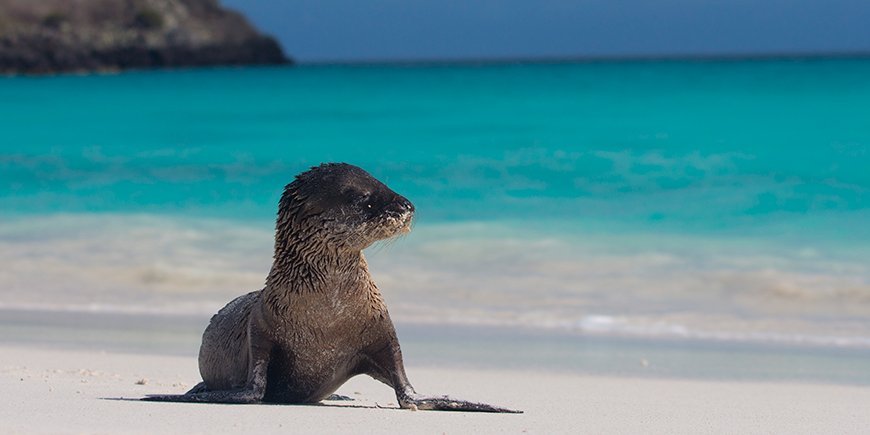
Galapagos sea lions
Galapagos finches
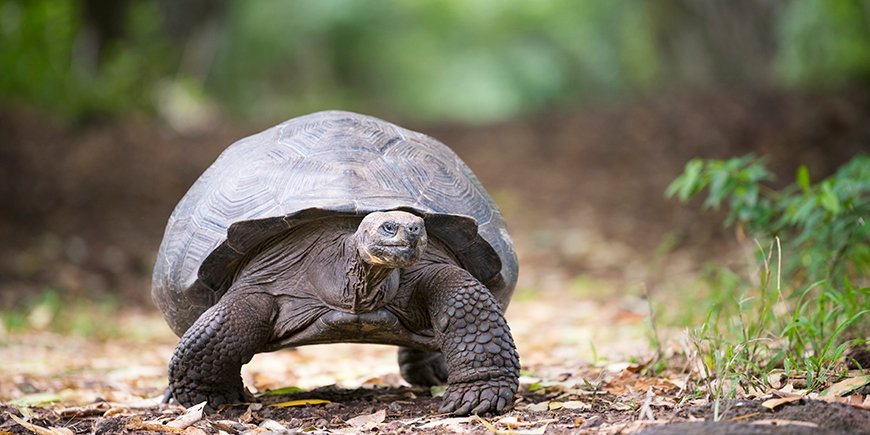
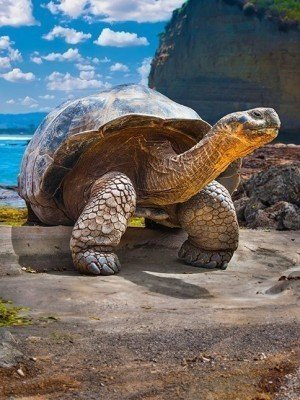
Galapagos tortoises
Sea iguanas
Land iguanas
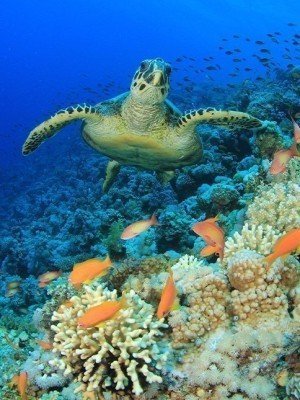
Green sea turtles
Fur seals
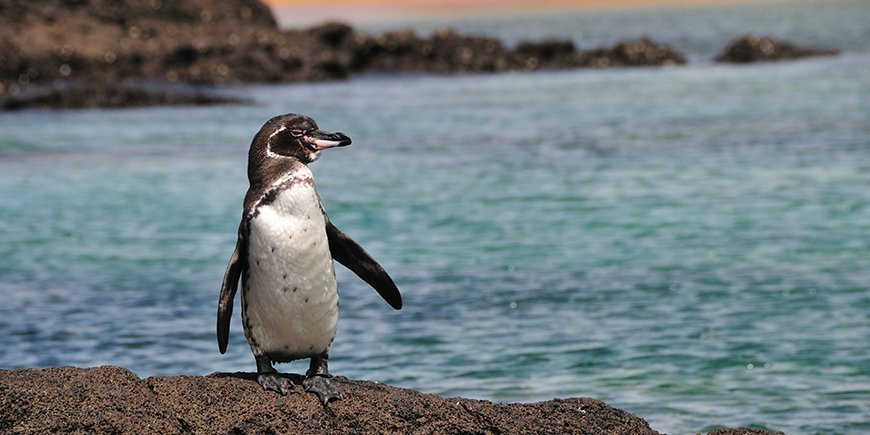
Penguins
And many, many more
January
January marks the start of the rainy season, or the warm and wet season.
Temperatures are rising, and the month is ideal for snorkelling. The water is calmer and warmer than in previous months, which are affected to a greater extent by the Humboldt Current.
Wildlife highlights in January:
The eggs of the Galapagos tortoise hatch and you can see the baby tortoises
Green sea turtles can be seen by the coast, waiting to lay their eggs on the beaches after dark
Male sea iguanas change colour, becoming lighter, and the mating season begins
February
As the rainy season progresses, temperatures in February begin to rise, both in the sea and in the air. The warmer weather and water, which is also calmer, make February a great month to snorkel.
Wildlife highlights in February:
Green sea turtles can be seen by the coast, waiting to lay their eggs on the beaches after dark
Sea iguanas are building nests on Santa Cruz
The penguins are migrating from Bartolome to Isabela and Fernandina, where the water is cooler
March
In March, the rainy season peaks, and it is hot with the chance of heavy showers. The month is a great snorkelling month as the sea is calm and the water is warm.
Wildlife highlights in March:
Green sea turtles can be seen by the coast, waiting to lay their eggs on the beaches after dark
Sea iguanas are building nests on Fernandina and North Seymour
The penguins are active in the waters off the coast
April
From April onwards, the rain begins to subside, marking the end of the rainy season.
Wildlife highlights in April:
The first of the green sea turtles’ eggs begin to hatch – 45–55 days after being laid
Sea iguanas are building nests
The land iguanas’ eggs begin to hatch on Isabela
May
It is still rainy season in May, but there is relatively little rain. Air temperatures have fallen slightly compared to previous months.
Wildlife highlights in May:
The eggs of the green sea turtles are still hatching and you can see the baby tortoises
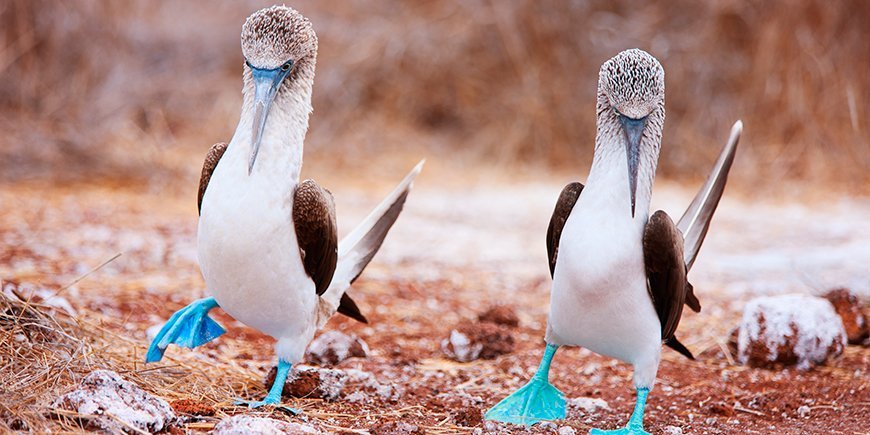
The blue-footed boobies start their world-famous courtship on North Seymour – famous for the distinctive dance in which their blue feet play a very special role
The eggs of the sea iguanas begin to hatch on Santa Cruz and Fernandina
June
June marks the last month of the warm and wet season, and it rains quite a bit. In some places, the landscapes begin to change colour, and water and air temperatures begin to drop slightly as we approach the dry season.
Wildlife highlights in June:
The blue-footed booby continues to woo the opposite sex
The last eggs of the green sea turtles hatch
The Galapagos tortoise begins its migration from the Santa Cruz highlands to the lowlands to build nests
Male Frigate Birds start their courtship of the females on North Seymour by inflating their red throat pouches
July
July is the start of the dry season, or the “cold and dry” season. There is very little rain. On the other hand, July is one of the months most affected by wind and the cold Humbolt Current coming from Antarctica. However, it is still possible to snorkel during the dry season, but it may be a good idea to wear a wetsuit.
Wildlife highlights in July:
The blue-footed booby is nest building
Female Galapagos tortoises begin their migration back to the Santa Cruz highlands
August
The weather in August is a continuation of July. The strength of the ocean currents peaks, causing the water temperature to drop. In August, you can thus experience the “lowest” temperatures of the year – air and water. If you wear a wetsuit, you can still enjoy some great snorkelling.
Wildlife highlights in August:
You can still see blue-footed boobies
The Galapagos sea lions typically begin to give birth to their pups
Female Galapagos tortoises migrate back to the Santa Cruz highlands. You can see large numbers of them at this time
The eggs of the frigate birds begin to hatch
September
It rains very little in September, and temperatures are some of the coolest of the year. But bear in mind that we are close to the equator, so the temperatures are still warm.
Wildlife highlights in September:
A good month to see the cute, playful sea lion cubs
The male sea lions are vying for the females’ favour on the coast
Lots of Galapagos tortoises in the Santa Cruz Highlands
Penguins are wooing the opposite sex and are therefore active in the water around Bartolome, making for some great snorkelling
October
October is much like September. The temperatures are some of the coolest of the year, albeit still warm, with relatively little rain.
Wildlife highlights in October:
It is still possible to see cute sea lion cubs
Galapagos tortoises in the Santa Cruz Highlands
Blue-footed boobies are raising their chicks, which have begun to hatch in North Seymour and Isabela, among other places
The fur seals’ mating season starts
The male penguins are wooing the females at Bartolome
November
As the dry, cool season draws to a close, the sea begins to calm and water temperatures begin to rise again, which also increases visibility, and snorkelling becomes even better.
Wildlife highlights in November:
The playful sea lion cubs are becoming more and more curious, so November is a good month to get close to them on a snorkelling trip
The green sea turtles start breeding, and the water is a hive of activity
Galapagos tortoises in the Santa Cruz Highlands
The male penguins are wooing the females at Bartolome
The fur seals continue to breed
December
December is the last month of the dry season, or the “cold and dry” season. Air temperatures are rising and there is more rain, though still relatively little.
Wildlife highlights in December:
Small Galapagos tortoises begin to hatch
The sea lions mate
The land iguanas start mating
The male penguins are wooing the females at Bartolome
The fur seals continue to breed
When should I travel to Galapagos?
Countless experiences await you on the Galapagos Islands, all year round.
But when should you travel there? That depends on whether there is something specific you would like to see. If not, you should simply choose the month that suits you best. There’s no such thing as a bad time to visit the Galapagos Islands.
Check out our tours to the Galapagos Islands below:
Take a fantastic trip to Ecuador with a visit to the active Cotopaxi volcano and the mysterious Quilotoa crater lake. The adventure ends with island hopping in the magical Galapagos Islands.
Unforgettable nature experiences await in Ecuador with the majestic Andes Mountains, the world’s largest rainforest, the Amazon, as well as a 6-day island-hopping adventure on the enchanting Galapagos Islands.
Wonderful experiences await in Peru & Ecuador, with visits to the old Inca capital Cusco, the Inca ruins Machu Picchu, Ecuador’s capital Quito and the fairytale Galapagos Islands with their indescribable wildlife.
Look forward to experiencing Ecuador’s colonial capital, the majestic Andes Mountains and their volcanoes and crater lakes, and finish your tour in Galapagos with an enchanting 5-day cruise.
Join a tour with a focus on the ultimate nature experiences in the Andes Mountains, the Amazon Rainforest, and the Galapagos Islands on a magical 5-day cruise.
Take a fantastic trip to Ecuador with a visit to the active Cotopaxi volcano and the mysterious Quilotoa crater lake. The adventure ends with island hopping in the magical Galapagos Islands.
Unforgettable nature experiences await in Ecuador with the majestic Andes Mountains, the world’s largest rainforest, the Amazon, as well as a 6-day island-hopping adventure on the enchanting Galapagos Islands.
Wonderful experiences await in Peru & Ecuador, with visits to the old Inca capital Cusco, the Inca ruins Machu Picchu, Ecuador’s capital Quito and the fairytale Galapagos Islands with their indescribable wildlife.
Look forward to experiencing Ecuador’s colonial capital, the majestic Andes Mountains and their volcanoes and crater lakes, and finish your tour in Galapagos with an enchanting 5-day cruise.
Join a tour with a focus on the ultimate nature experiences in the Andes Mountains, the Amazon Rainforest, and the Galapagos Islands on a magical 5-day cruise.