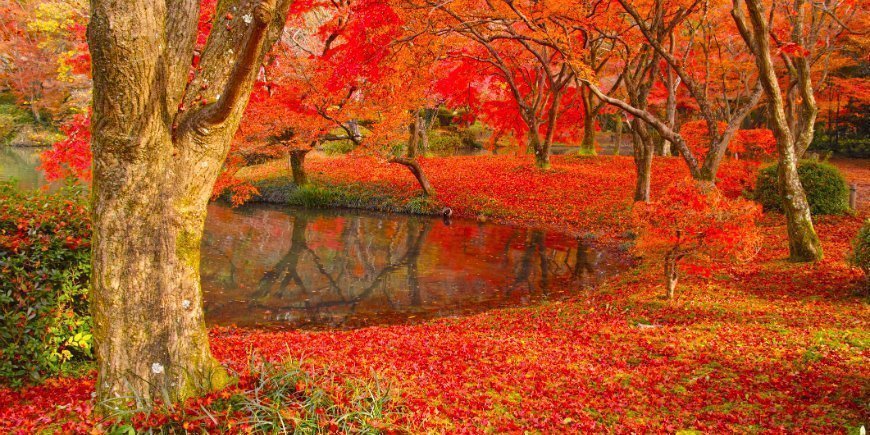
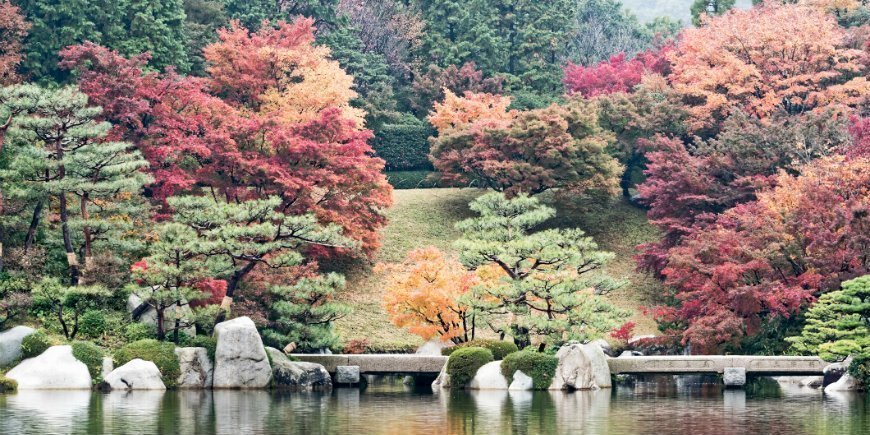
Koyo cloaks the landscape in beautiful autumn shades of yellow, orange and red, and it can be every bit as enchanting as the pink crowns of the cherry trees in the spring.
During koyo, the reddish leaves of the Japanese maple trees, also called momiji, are a particularly outstanding sight. The beautifully shaped leaves in their varying shades of red give Japan a fairytale look in the autumn. And in fact, the same Japanese character is used for both “autumn colours” and “maple tree”, and the Japanese maple leaves are also synonymous with the autumn event.
When is koyo?
Koyo can be experienced throughout the country, but just as the cherry blossom first occurs in the south due to the heat, koyo starts in the northern part of Japan.
The autumn phenomenon starts around mid-September, spreading southwards as autumn makes its way into the different parts of Japan. Koyo lasts until December, and the wonderful autumn shades can be seen for around 20 to 25 days in each area.
Koyo time is popular with the Japanese and has been for several decades. And visitors from all over the world have also had their eyes opened to the phenomenon.
The enchanting autumn is not only experienced in the Japanese areas of natural beauty, but in the cities, too.
When can you experience the autumn leaves in the Japanese cities?
Depending on where you are in Japan, you can experience the koyo phenomenon at different times during the autumn. The times given are approximate times, as they may change due to the unpredictability of the weather.
In Kanazawa, you can experience the autumn colours from the beginning of November.
One of the most beautiful places to experience the breathtaking colours of the koyo phenomenon is in the Kenrokuen garden, which is one of Japan’s finest.
In Tokyo, you can experience Koyo in late November and early December.
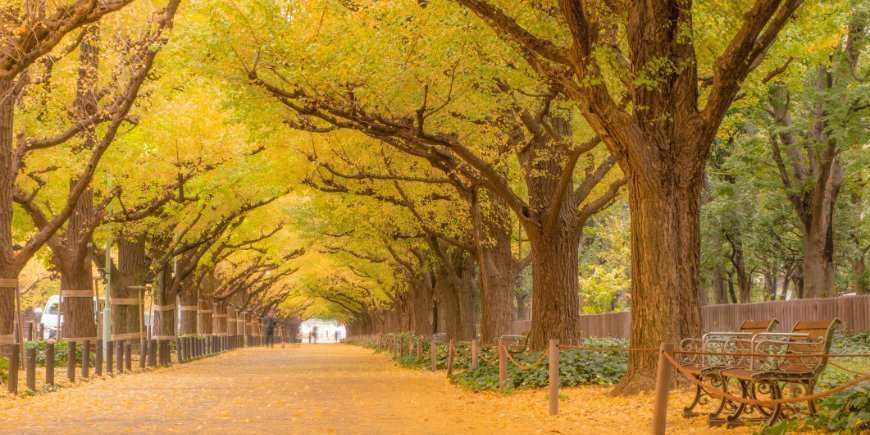
Enjoy a spectacular sight on a walk down Icho Namiki – known as Gingko Avenue in the capital. The yellow trees form an exquisite avenue on either side of the road. You can also go for a walk in the Koishikawa Korakuen Garden, which also offers a unique autumnal moment.
In Kyoto, you can experience koyo around mid-end November.
The ancient city is one of the most beautiful places to experience koyo when the parks surrounding the city’s many temples are adorned by the autumn leaves of the beautiful maple trees. Go for a walk around Tofukuji Temple or Kiyomizudera Temple, which is a picturesque sight.
In Osaka, you can experience the autumn phenomenon in several places at the end of November/early December.
Experience, for example, the gingko trees in the castle grounds in the heart of the city and along Midosuji street, where some 800 trees are planted. Just outside Osaka, you can also enjoy an extraordinary experience when you walk on the 280-metre-long Star Swing bridge in Hoshida Park, which affords a 360-degree view over the beautiful tree tops.
Hiroshima also offers special koyo experiences around mid-November.
See all the autumn colours at Mitaki-dera Temple in the city or head to Miyajima Island a little outside Hiroshima, which is known for its floating temple and Momiji manju buns (maple leaf buns).
Koyo’s unique nature
You can experience the leaves of the maple tree all over the country.
Autumn’s favourite trees grow in many Japanese gardens and at temples.
In addition to the iconic red maple leaves, there are a number of other beautiful trees that help to colour the Japanese autumn in beautiful shades.
Another of the popular trees in the autumn is the ginkgo tree. The ginkgo leaves adorn the Japanese autumn landscape with beautiful shades of yellow in formidable contrast to the red maple leaves. Although you might think it was the cherry tree, the gingko tree is actually Tokyo’s symbol when it comes to trees.
In addition, you can also experience the leaves of the nanakamado tree, the Japanese larch or the cherry tree in the autumn.
An experience for life with big contrasts between ultra-modern Tokyo, exquisite temples and gardens, maiko in kimonos and traditional tea houses in Kyoto, and the samurai town of Kanazawa.
You get Japan to your very core on this big tour. Experience famous highlights like Tokyo, Kyoto, Hiroshima, Kanazawa and Osaka spiced with less famous pearls like Okayama and Naoshima.
Experience the essence of Japan short and sweet with the most important cultural cities: Tokyo and Kyoto. The contrasts between the ultra-modern and the old traditions truly amazes most people.
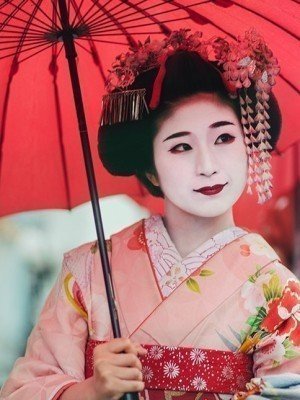
An experience for life with big contrasts between ultra-modern Tokyo, exquisite temples and gardens, maiko in kimonos and traditional tea houses in Kyoto, and the samurai town of Kanazawa.
You get Japan to your very core on this big tour. Experience famous highlights like Tokyo, Kyoto, Hiroshima, Kanazawa and Osaka spiced with less famous pearls like Okayama and Naoshima.
Experience the essence of Japan short and sweet with the most important cultural cities: Tokyo and Kyoto. The contrasts between the ultra-modern and the old traditions truly amazes most people.
...10 daysFrom £%s
Japan is a country you simply have to experience at least once in your lifetime.
If you want to see the Asian country swathed in beautiful autumn leaves, you should travel there when it’s koyo season.
If you are unsure about what a tour is the one for you, please call our travel specialists who are on hand to help you off on your next dream holiday.